
14 Days in Vietnam: The Best Time to Visit in 2025
Deciding on the best time to visit in Vietnam can feel like a puzzle. This long, S-shaped country has three different weather zones, meaning it can be snowing in the mountains of Sapa while people are sunbathing on the beaches of Phu Quoc. But don’t worry—we have cracked the code for you.
If you want the short answer: November to April is generally the “golden window” for most travelers. During these months, rainfall is low, and temperatures are pleasant across most of the country. However, if you are looking to save money or see specific festivals, the “best” time might look a little different for you.
Let’s break down everything you need to know to plan your dream trip to Vietnam.
The Short Answer: When Should You Go?
If you want to see the whole country in one go—from the limestone karsts of the north to the river deltas of the south—aim for February, March, or April.
- Best Overall Weather: February to April.
- Best for Beaches: December to April (South), February to August (Central).
- Best for Trekking: October to November and March to April.
- Cheapest Time to Fly: May and September.
Weather by Region: A Tale of Three Climates
Vietnam is over 1,000 miles long. This means the weather in Hanoi is often completely different from the weather in Ho Chi Minh City. To pick the best time to visit in Vietnam, you need to look at where you are going.
1. Northern Vietnam (Hanoi, Sapa, Ha Long Bay)
The north has four distinct seasons. It can get surprisingly cold here!
- Best Time: October to November and March to April.
- What to Expect: These months offer cool, dry days perfect for hiking in Sapa or cruising Ha Long Bay. The rice terraces in Sapa are a stunning sight, especially during the harvest season.
- Winter Warning: December and January can be very cold and misty. Temperatures can drop below 10°C (50°F). If you visit during this time, pack a warm jacket.
- Summer Heat: May to August is hot and sticky with frequent heavy rain.
The terraced rice fields of Sapa in Northern Vietnam are most beautiful in their golden harvest season around September and October.
2. Central Vietnam (Hue, Da Nang, Hoi An)
The central coast protects itself with high mountains, creating a unique climate pattern. This region is home to the charming ancient town of Hoi An, which is magical at night when it’s lit up by thousands of lanterns.
- Best Time: January to August.
- Beach Season: If you want sun and sand in Da Nang or Hoi An, go between February and May. It is warm but not scorching.
- Storm Season: Avoid travel here from September to November. This is typhoon season. Heavy rains can cause floods, especially in the ancient town of Hoi An.
Hoi An ancient town is best visited in the dry season from January to August, where you can enjoy its iconic lantern-lit streets at night.
3. Southern Vietnam (Ho Chi Minh City, Mekong Delta, Phu Quoc)
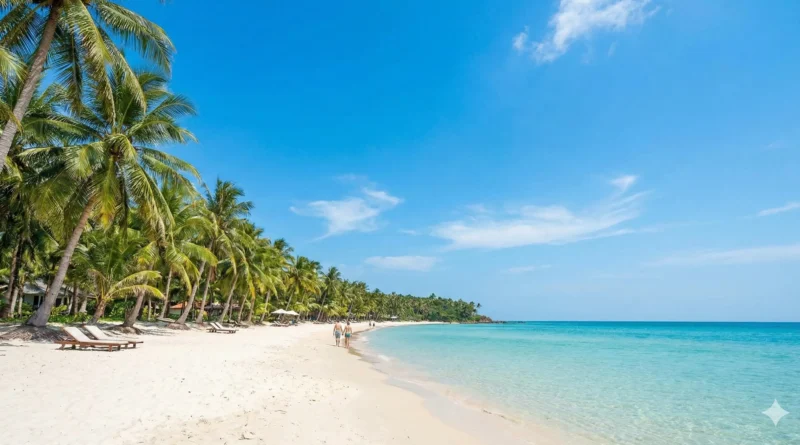
The south is tropical. It has two simple seasons: dry and wet. It is hot year-round. For those seeking a perfect beach escape, the island of Phu Quoc in the south is an ideal destination during the dry months.
- Best Time: November to April (Dry Season).
- What to Expect: Blue skies and calm seas. This is the perfect time for the beaches of Phu Quoc.
- Wet Season: May to October. Expect short, heavy afternoon showers. They rarely last all day, so travel is still possible if you don’t mind getting a little wet.
For the best beach experience in Southern Vietnam, visit Phu Quoc Island between November and April for sunny skies and calm waters.
Vietnam’s Travel Seasons: Pros and Cons
Understanding the tourist seasons helps you balance good weather with your budget.
High Season (November – March)
This is when the weather is coolest and driest nationwide.
- Pros: Perfect weather for outdoor activities; great for beach lovers in the south.
- Cons: Prices for hotels and tours are at their highest. Popular spots like Ha Long Bay and Hoi An will be crowded.
- Note: The Lunar New Year (Tet) usually falls in late January or early February. The country basically shuts down for a week. Travel can be chaotic, and prices skyrocket.
Shoulder Season (April – June, September – October)
Many savvy travelers think this is the best time to visit in Vietnam.
- Pros: You get a mix of good weather and thinner crowds. You can find great deals on accommodation.
- Cons: You might catch a little rain, especially in the afternoons.
- Highlight: April is fantastic because the north is warming up, the center is dry, and the south hasn’t hit full monsoon yet.
Low Season (July – August)
This is summer vacation time for locals but the rainy season for international visitors in many parts.
- Pros: Resorts offer their lowest rates. The countryside is lush and green.
- Cons: It is hot and humid. Heavy rains can disrupt travel plans, especially trekking or boat cruises.
The Cheapest Time to Fly to Vietnam
If you are a budget traveler, your flight ticket is likely your biggest expense. Finding the cheapest time to fly to Vietnam can save you hundreds of dollars.
- Cheapest Months: May and September usually offer the lowest fares. These months sit on the edge of the rainy season, so demand drops.
- Flight Tips:
- Avoid booking flights around Tet (Lunar New Year) and Christmas.
- Use comparison tools like Skyscanner or Google Flights and set alerts for your dates.
- Flying mid-week (Tuesday or Wednesday) is often cheaper than flying on weekends.
Pro Tip: Look for flights into Ho Chi Minh City (SGN) or Hanoi (HAN). These are the main hubs. From there, domestic flights to places like Da Nang or Phu Quoc are very affordable, often under $50 USD.
Festivals You Shouldn’t Miss
Timing your trip around a festival can add a magical layer to your experience.
Tet Nguyen Dan (Lunar New Year)
- When: Late January or early February.
- What is it: The most important celebration in Vietnamese culture.
- The Vibe: Cities empty out as people return to their home villages. Houses are decorated with yellow apricot blossoms (south) or pink peach blossoms (north).
- Traveler Note: While beautiful, it is hard to travel during Tet. Many shops and restaurants close. Book transport months in advance.
Mid-Autumn Festival (Tet Trung Thu)
- When: September or October (Full Moon).
- Where: Best seen in Hoi An or Hanoi.
- The Vibe: This is a festival for children. You will see lion dances, mooncakes, and thousands of colorful lanterns lighting up the streets.
Hue Festival
- When: Every two years (usually April, May, or June).
- Where: Hue City.
- The Vibe: A celebration of culture, art, and history in the old Imperial Capital. Expect elaborate costumes and royal music.
Is There a “Worst” Time to Visit?
Honesty is key. While Vietnam is beautiful year-round, there are times that might ruin your specific plans.
- For Beach Lovers: Avoid Central Vietnam (Hoi An/Da Nang) from September to November. The typhoons are real, and floods are common. You won’t be able to swim.
- For Trekkers: Avoid Sapa in July and August. The trails get muddy and slippery due to heavy rain, making hiking dangerous and less enjoyable.
- For City Explorers: Hanoi in June and July can be brutally hot (over 35°C/95°F) with high humidity. Walking around the Old Quarter can feel like being in a sauna.
Essential Travel Tips for 2025
Before you book your ticket, keep these practical tips in mind.
1. Visa Requirements
Vietnam’s e-visa policy is now very friendly. Citizens from all countries can apply for a 90-day e-visa.
- Cost: Approx. $25 USD.
- Process: Apply online at the official government portal. It usually takes 3-5 working days.
- Tip: Print a paper copy of your e-visa to show at immigration.
2. Packing Smart
- Layers are your friend. If you go north in winter, you need a fleece. If you go south, you need breathable cotton.
- Rain Gear: A lightweight rain poncho is better than an umbrella. You can buy cheap ones at any convenience store in Vietnam.
- Shoes: Bring comfortable walking shoes that are easy to slip on and off. You will take them off frequently when entering homes and pagodas.
3. Money Matters
- Currency: Vietnamese Dong (VND).
- Cash is King: While credit cards are accepted in hotels and malls, you need cash for street food and markets.
- ATMs: They are everywhere, but check your bank’s foreign transaction fees first.
4. Getting Around
- Grab App: Download the Grab app (like Uber). It is the safest and easiest way to book car or motorbike taxis in cities. You see the price upfront, so no haggling is needed.
- Trains: The Reunification Express train runs the length of the country. It is a slow but scenic way to travel. The leg between Hue and Da Nang (Hai Van Pass) is world-famous for its views.
Sample 2-Week Itinerary for the Best Weather
If you travel in March, here is a perfect route to catch the best weather in all three regions:
- Hanoi (2 Days): Explore the Old Quarter. Cool, dry weather.
- Ha Long Bay (2 Days): Overnight cruise. Misty mornings and sunny afternoons.
- Hue (1 Day): Explore the Imperial City. Warm and pleasant.
- Hoi An (3 Days): Beach time and ancient town. Perfect sunshine.
- Ho Chi Minh City (2 Days): War Remnants Museum and street food. Hot and dry.
- Mekong Delta (1 Day): Boat trip through the canals.
- Phu Quoc Island (3 Days): End your trip relaxing on the beach.
Final Thoughts
There is no single “wrong” time to visit this amazing country. Even in the rainy season, the showers are usually short, and the landscapes are vibrantly green.
However, if you want the Cheapest Time to Visit Vietnam with the lowest risk of rain and the most comfortable temperatures, aim for February, March, or April. You will get the best of everything: cool hikes in the north, sunny beaches in the center, and dry days in the south.
Vietnam is an affordable, welcoming, and endlessly fascinating destination. Whether you are sipping egg coffee in Hanoi or eating Banh Mi in Saigon, you are in for the adventure of a lifetime.
Trusted External Resources
-
Vietnam National Administration of Tourism
https://vietnamtourism.gov.vn -
Weather data reference
https://www.worldweatheronline.com